Category Archives: Announcements

Report of TD SIG Forum @ JALT2025

This year’s Teacher Development SIG forum at the JALT international conference in Tokyo was a success. As has been the pattern in the last few years, the forum followed a workshop format which allowed sessions to be interactive, guiding participants down a journey of development. Not only did our three workshop leaders engage participants with thought-provoking content, but the topics and tasks created a sense of pragmatic application.

For the first session on podcasting, Matthew Turner led us down a path of authentic practice wherein we learned that decision-making and speech choices about content and flow can deviate from what we initially intend. Moreover, a podcast roleplay interaction with participants showed how reasoning or argument might lead to critical topic points but often give way to personalities and idiosyncrasies – especially our own! Plenty of insights were gained, from authentic takes on podcasting planning to purposeful ways of managing the ebb and flow of discussion points.

For the second session, John Rucynski led us down a path of discovery about introversion. Participants got to hear and discuss teaching experiences related to introverted or extroverted personalities, as well as implications for teaching environments. Further, we learned that the fine line between what is labelled as introversion and what people actually claim as their own introverted qualities can be blurred. Though our work within EFL contexts may push us to become the ‘ideal’ teacher, if introverts welcome their introverted ways, it is possible to bring a power of balance. One’s introversion can become akin to the traditionally revered ‘extroverted one’, whether planned or not.

For the final session, Sajjad Pouromid introduced an important take on listening and listening assessment. Participants engaged in role plays using prompt cards to monitor and reflect on listenership behaviors such as body language, backchanneling, eye contact, and response timing. The session moved beyond listening as comprehension to highlight the communicative value of active listenership. Through a personal anecdote and group discussion, attention was drawn to the gap between what is valued in tests and what matters in real conversations. The session offered practical insights into raising awareness of listenership in language teaching and assessment.

Our 10-12 participants enjoyed an intimate development forum and each expressed the enjoyment and usefulness of the forum. We are looking forward to hearing your journey of development and seeing you soon!

Review of TD SIG Forum @ PanSIG2025

It was a small, intimate vibe at the gathering of the Teacher Development SIG Forum late on a rain-swept Saturday on the Kanda University International Studies campus for PANSIG 2025. The morning had started strong with a thorough presentation from Dr. Johnmarshall Reeve on facilitating autonomy-supportive teaching, agentic engagement, the importance of invitational language, and success as defined as ‘thriving’. It was great to see in the TD SIG’s two presentations some of Reeve’s key themes become actualised in real time and in workshop form. This forum happened to be the only workshop-style session I attended that weekend, reflecting that TD is all about developing through doing and, most importantly, doing together. A feeling of togetherness seems to be at the heart of the SIG and, as it turns out, autonomy-supportive teaching.

Throughout her presentation “Developing Teacher Autonomy Through Reflective Practices: Intersubjectivity and Communication”Joan Kuroda spoke effervescently about her love of mentorship training (and what it could do for autonomy), shared reflection, and John Dewey (whom she dubbed “the godfather of reflection”). Behind all of this, sometimes explicitly stated but deeply imbedded, was a deep respect for the chance of learning, developing through recognising mistakes, and vulnerability. Evident throughout her talk was a study of reflective practices, being ensconced in approaches such as Mac Van Manen and hermeneutic phenomena. However, she said she was tired of only studying about this and how for the last couple of years, it had truly been time to “get going” with reflective practice. She detailed her experiences with a small reflective group of educators, which I later learned had morphed over time but was happily charging along in a very intentional and purposeful way. At the heart of her presentation was an incident about three high-energy boys, seemingly off-task and overly jocular in a classroom that was otherwise on point. The crux of the issue, however, was being addressed with the possibly over-familiar diminutive ‘-chan’, which caused the teacher quite a bit of distress. Taking a phenomenological approach to analyse this incident, the reflective approach used begins with a teacher collecting data about an incident, creating a narrative about it, and then beginning a line-by-line analysis of this narrative in what Joan called a “crafted story”. The word choice here is key- it is not a retelling or description of events: it is a creative act and what Joan called “the making and re-making of reality”. Reflection is not a one shot and you’re done act- it is built on the foundation of plausibility, a “suspension of judgement”, empathy (with the students and with other teachers), and it is a creative act defined collectively.
 
The small groups of reflecting teachers were then further guided to wonder about what might have been happening in that classroom, what could the teacher do, and the teacher’s own decision for what could be done. In our own particular group, we spoke of the possibility of under-challenged students, why some teachers have thicker skin than others, why this seeming incident of disrespect would be bothersome (or not even disrespectful) to some teachers and not others, and the likely previous experiences some students had with ALTs. It was curious to hear that, in the end, the teacher approached the students directly to find out about the issue, which was a student desire to be closer to the teacher. As it also turns out, following on from this chat with the students, the classroom rapport and performance was enhanced. I would have loved to enquire more about the wording of that chat with the students, for I assume that it involved quite a lot of emotional vulnerability on the part of the teacher in admitting his/her taking offense at the use of the diminutive. I also wondered about the value of reflecting ‘what if’ and ‘what could’ (phrases Joan instructed us to use when attempting our own reflections) if you could just get the ‘real’ answer straight from the students’ mouths. However, while Joan did not say this explicitly, I’d like to think that the process of collective and reflective exploration of events (with other teachers prior to consulting the students) prepared the teacher for open-minded discussion and for a potential answer that a student may give. In a word, it gave the teacher the confidence to be vulnerable in a safe space with other teachers first and thus hopefully recreate that safe-space with the students in a similar conversation.
 
Later in the session, Joan and I wondered about how often teachers do the tasks that we ask of students, and we agreed that the frequency is probably a lot lower than we would like to admit. I also asked Joan why she insisted that this reflective process had to be about a ‘problem’, rather than a win. Joan contended that you could use this process for wins, however it was problems that brought about vulnerability, and it is vulnerability that brings teachers together, which is the training ground for bringing teachers and students together. In this sense, this reflective practice linked back nicely to Reeve’s contentions in the morning session about how, in an autonomous supportive environment, more invitational language is needed (‘you may want to/ you could’, as opposed to ‘you must/you should’) and also, that it is equally important, if not more important, for the students to reflect on their autonomous actions with each other, as compared to explaining their autonomous decisions to the teacher.  Autonomy is an act defined by sharing with equals. It was here that I was very much reminded of the first TD SIG Forum I attended at JALT 2023, in which current TD President Jon Thomas gave a deeply personal talk about how, in the classroom, there is no ‘them and me’ when it concerns the teachers and the students, despite how often teacher-talk contains notions about how ‘they’ (the students) didn’t get it. It was a truly motivational speech, so it was great to see some of these unifying themes come together in a TD Forum once again.

The proceedings then moved from reflecting collectively to creating collectively with Anthony (Chuck) Glovia’s “Lyrics as Language: Collaborative Songwriting for Expressive Agency in the Classroom”. Chuck opened the presentation with the think-pair-share on the question “Why do lyrics stay in our memory?”, before outlining the agentic elements of creating music in class. Namely, he highlighted how students choosing lyrics demonstrated an expressive side of autonomy, the cultural agency of choosing themes, and also how the performative element in lyric creation demonstrated linguistic competence. This was a great verbalisation of some of the agentic themes of the conference, but it was the subsequent stages that made for an interesting experience. After demonstrating a sample 3-line verse song in a blues format, Chuck then had TD attendees gather into small groups to make a similar song. Themes were suggested and attendees were invited to collaboratively create a 3-line verse. Thus, we are returned to the former question concerning how often teachers do what they ask their students to do. What followed revealed some curious sensations about creativity, anonymity and collaboration. It felt far easier to create the 3 line-songs as a group than individually. As a group, the sense of pressure and accountability seemed far less, even though we all contributed one line.  This reminded me of the plenary session in the morning; in a brief comment, Reeve talked of the value of anonymity in autonomy when asking for student feedback via apps such as Mentimeter. The notion of anonymous autonomy was implied in this lyric creation act, and I would have liked Chuck to explore ideas how creating music in class could be both authentically agentic, equally anonymous, and potentially more free of anxiety for language learners when creating a ‘performer’ identity.
 
What was equally interesting was how, mid-presentation, Chuck was directly challenged with a question about why we were doing this (a question that could be aimed at why would students do this activity and also why as teachers we were we doing that right then). I found this fascinating for three key reasons. Firstly, I would like to think that the TD is a SIG that has effectively created an atmosphere where teachers feel comfortable challenging one another. Secondly, this moment also brought me back to another key point from the plenary session of the morning. It was so refreshing to see Reeve stipulate the benefits of explicitly stating why students are being ‘invited’ to do something, something I have always felt is vital to purposeful learning. Thirdly, even if I felt that Chuck had actually stated the ‘why’ of the activity, I loved the fact that it was asked again and that it could be answered again. As a matter of fact, I would be happy to be asked that question every 10 minutes in a lesson, as if to keep the raison d’etre of all learning alive and burning and always in our minds.

Some 10 minutes into the session, after the songs were made, there was sadly no time to share them despite attendee desire to do so. I would like to share the lyrics that were made in our group for a couple of reflective reasons. The stanza went a little something like this:

It’s so hard to make a decision (I chose my clothes today)
I can’t make a decision to save my life 
So I’ve decided to save nothing at all.

Despite the original impetus for the lyrics being an inability to choose clothes, the collaborative writing of this stanza came very quickly. In my own classes, I am often ambivalent about how the collaborative process can make some tasks take longer than if done individually, but often know that interpersonal skills being developed are equally as important as the linguistic. In this case, however, it was very quick, connected, and authentic. The song resonated quite deeply with all group members. Perhaps we felt a creative union coming together as a group, that we had created, and we felt one as agents. If the song was right, then perhaps that’s because, as Joan had illustrated in the collaborative reflection, we are often wrong about what we think is happening, that our decisions might not be as important as we think they are, and that is how things get done. Or maybe we just wanted to thrive. And like a successful, thriving shoe company, maybe sometimes you ‘just do it …. together’. 

Cam Hill
Teacher Development SIG
 

TD SIG 2025 Online Summer Seminar with Dr. Sam Morris

Teacher Development presents “Walk a Mile”, a series of interviews, developmental seminars, and discussions.

Our first guest, Dr. Sam Morris, speaks with us about emotion regulation and his expansive research.

If you are interested in picking up a copy of Sam’s new book, Language Teacher Emotion Regulation: An Exploration in Japan, you can do so at the following link: https://multilingual-matters.com/page/detail/?K=9781800419124

Click here for the video. Enjoy and stay tuned for the next guest!

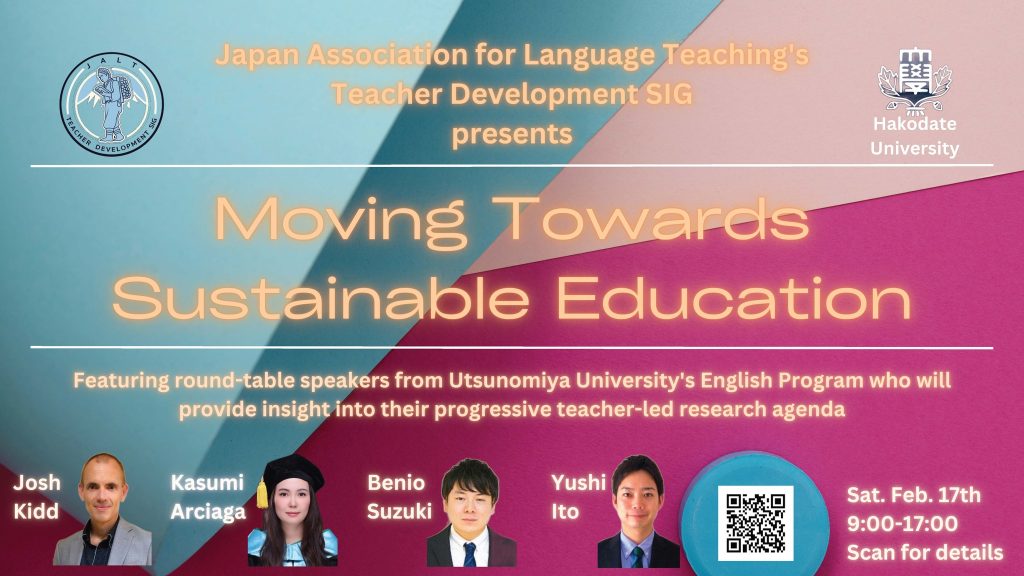
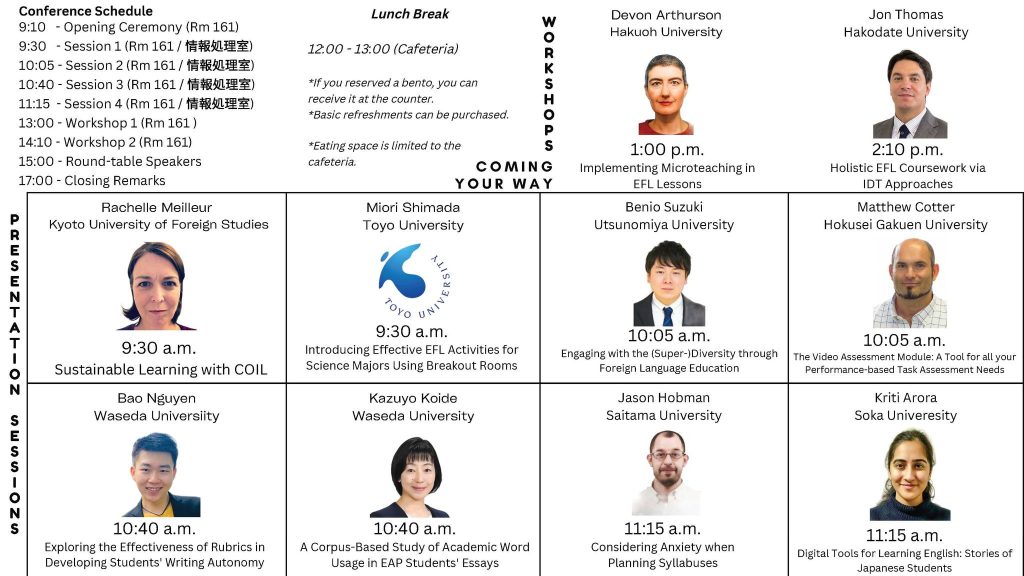
17th Annual NEAR x Teacher Journeys Conference

Our longstanding and always profound Teacher Journeys Conference once again proved to be an inspirational conference for all.

Collaborating with JALT Niigata Chapter – and held in Niigata in June – our one-day “17th Annual NEAR x Teacher Journeys Conference” featured 16 presentations with a breadth of topics including making barrier-free classrooms, service-learning projects, and AI and other technology-based learning techniques.

The atmosphere was electric and our plenary speaker Wayne Malcolm offered up an inspirational story of personal and professional development coming from a multitude of sources.


NEAR x Teacher Journeys Conference

Mark your calendars! The 17th Annual NEAR Language Education Conference x Teacher Journeys Conference is happening on Saturday, June 28th, 2025 in Niigata!

This year’s theme is: “Teacher Journeys, Student Journeys: Leading and Learning”. Join us as we explore how educators and learners grow, lead, and inspire one another through personal and professional journeys. 

We’re thrilled to welcome Wayne Malcolm (Senior Lecturer, Fukui University of Technology & JALT Director of Conference) as our plenary speaker, presenting: “Representation Matters: My Journey on the Learning Road”

Venue: Niigata University of International and Information Studies Chuo (Furumachi) Campus https://maps.app.goo.gl/4iYa8ZcnGxPdtyFR9

Fees: JALT members ¥3,500 | Non-members ¥4,500 | Students ¥500

Scan the QR code or open the following form for registration details: https://forms.gle/1CrJDgbUZvWZ9pvv5 

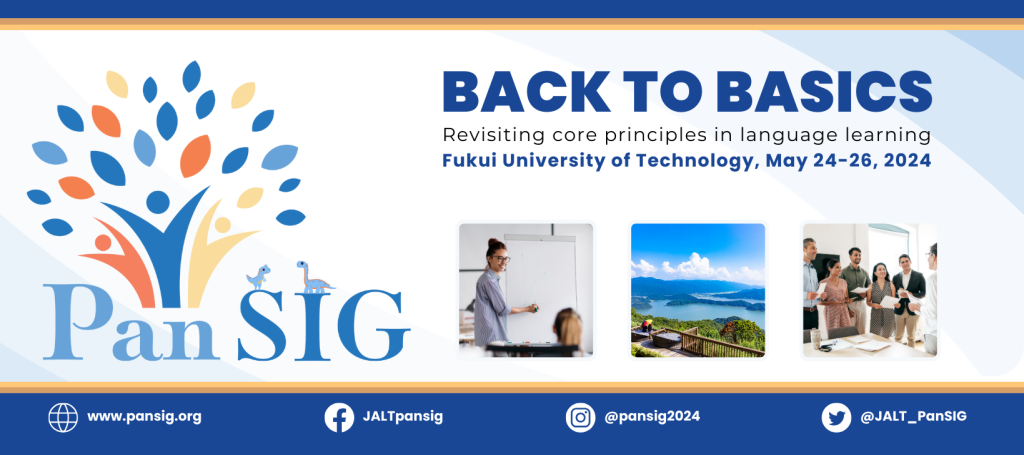
TD SIG Forum @ PanSIG 2025

Ready to dive into Agency & Autonomy in Language Learning?

Join us for the Teacher Development SIG Forum at JALT Pansig Conference 2025!

Saturday, May 17th | ⏰ 16:55–17:55
 Building 3, Room 201
 Kanda University of International Studies, Chiba

 Featuring:
✔️ Joan M. Kuroda – “Developing Teacher Autonomy Through Reflective Practices: Intersubjectivity and Communication”
✔️ Chuck Gloria – “Lyrics as Language: Collaborative Songwriting for Expressive Agency in the EFL Classroom”

 Don’t forget to stop by our SIG table in Building 3, Room 107 — we’d love to connect

More info & registration: https://pansig.org/2025


NEAR x Teacher Journeys Conference: Call for Proposals

The Teacher Development SIG are thrilled to announce that we have teamed up with the JALT Niigata Chapter for an exciting collaboration: the joint NEAR Language Education Conference x Teacher Journeys Conference.

Date: June 28th 2025 (Saturday)

Location: Chuo (Furumachi) Campus of Niigata University of International and Information Studies – https://maps.app.goo.gl/4iYa8ZcnGxPdtyFR9

Theme: “Teacher Journeys, Student Journeys: Leading and Learning”

At the heart of education lies a profound truth: both educators and learners embark on unique paths of growth and discovery. Our conference explores the rich range of experiences that shape our educational identities, from the initial steps into the world of learning to our ongoing development as teachers and students. These journeys not only define who we are but also influence how we teach, learn, and connect with one another in the classroom and beyond.

We cordially invite you to share your insights and experiences through a presentation. Whether your focus aligns with the theme of teacher/student journeys or encompasses broader language education topics, we eagerly anticipate your contributions.

To submit your abstract, please use our user-friendly Google Form to streamline the submission process. You can expect a response regarding your submission within 1-2 weeks. A quick turnaround time allows you to plan ahead and prepare for our upcoming conference.

Don’t miss this opportunity to be part of a transformative dialogue on education. Your unique perspective could inspire colleagues and help them shape the future of teaching and learning. We look forward to receiving your submissions and welcoming you to Niigata for what promises to be an enlightening collaborative event.

Submission Guidelines:  

  • Presentation length: 25-minute talk, 40-minute talk (including Q&A), and 1-hour poster presentation.

  • Submission deadline: March 23rd, 2025. 

  • Submission procedure: Applications submitted online

    • Abstract (for vetting): 250-300 words        

    • Summary (for the conference handbook): 150-200 words

TD SIG Forum @ PanSIG2025: Call for Presenters

PanSIG2025 will be held May 16-18 2025 at Kanda University of International Studies in Mihama Ward, Chiba City, Chiba Prefecture.

The Teacher Development SIG is inviting researchers, instructors, and practitioners to submit proposals for our forum at PanSIG focused on autonomy and agency in language education

The forum will highlight approaches and experiences with fostering learner autonomy and agency in educational settings. This topic is especially timely as we recognise that our learners often demonstrate a strong sense of both individual and collective engagement in their learning, while also expressing a desire for greater freedom in their learning journey.

Possible themes for the forum include:

  • Blended learning
  • Collaborative learning and peer-to-peer interactions
  • Critical pedagogy and critical thinking
  • Formative assessment and feedback practices
  • Learner autonomy and learner-centered approaches
  • Metacognitive skills and reflective practices
  • Self-regulated and self-directed learning
  • Teacher autonomy and teacher agency

We welcome a wide range of perspectives on these themes and encourage submissions from both new and experienced presenters.

Presentation Format:

  • Presentations will be either 20 or 30 minutes in length (depending on number of presenters) followed by 10-15 minutes of discussion time.
     
  • Forum discussions are interactive by design, and we encourage presenters to incorporate engaging elements such as scaffolded rounds, collaborative tasks, or other creative formats to encourage participant involvement.

Submission Process:

After submitting your proposal through the Google Form, you can expect feedback within 1 week of your submission. If your proposal is accepted, we will support you throughout the presentation process to ensure you have everything you need for a successful session.

You can submit your proposal via the Google Form until March 10th. Please email jalt.td.sig@gmail.com if you have any questions.

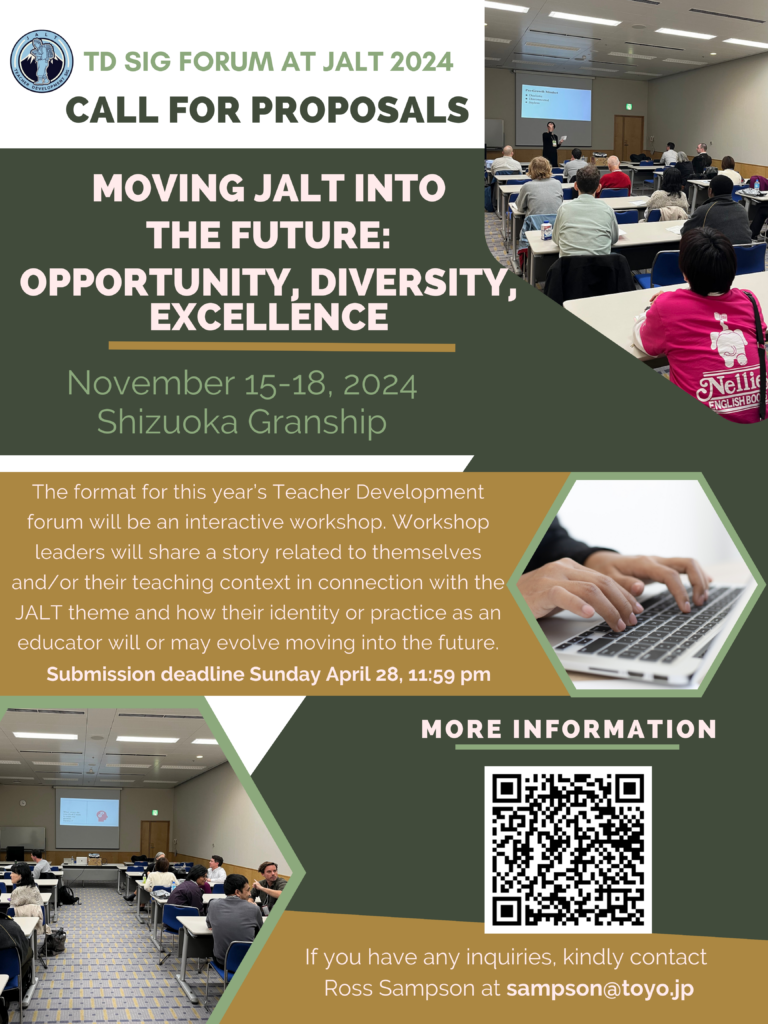
TD SIG Forum @ JALT2024

The TD SIG will be holding an interactive workshop-style forum at JALT 2024:

️ Date: Sunday, November 17
 Time: 12:00 – 13:30
Place: Room 908

This unique, interactive workshop format offers more engagement and collaboration than a traditional presentation, so bring your curiosity and ideas! We look forward to seeing eager educators ready to connect and learn. See you at JALT 2024!


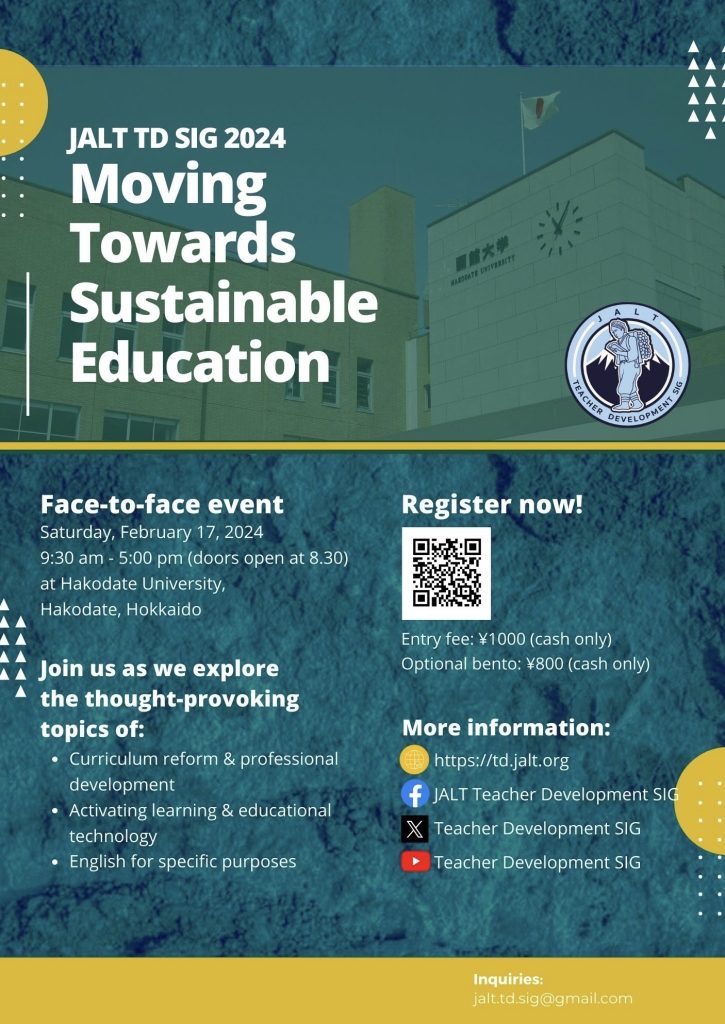
Teacher Journeys 2024 Conference Registration

The TD SIG’s Teacher Journeys conference will be held in-person at Tokyo City University (Setagaya Campus) on Saturday, October 12th.

The presentation schedule is currently being prepared. In the meantime, pre-registration for the conference is now open and is ¥2,000 for JALT members and ¥3,000 for non-JALT membersClick here to pre-register.

Teachers’ stories are instrumental in shaping our professional growth and practices. This event is a prime opportunity to inspire and connect with others, enriching our collective understanding and contributing to our development as educators. We look forward to seeing everyone on the conference day!